How Digital Skills Are Shifting Power for Women Living with Disabilities in Kisumu.
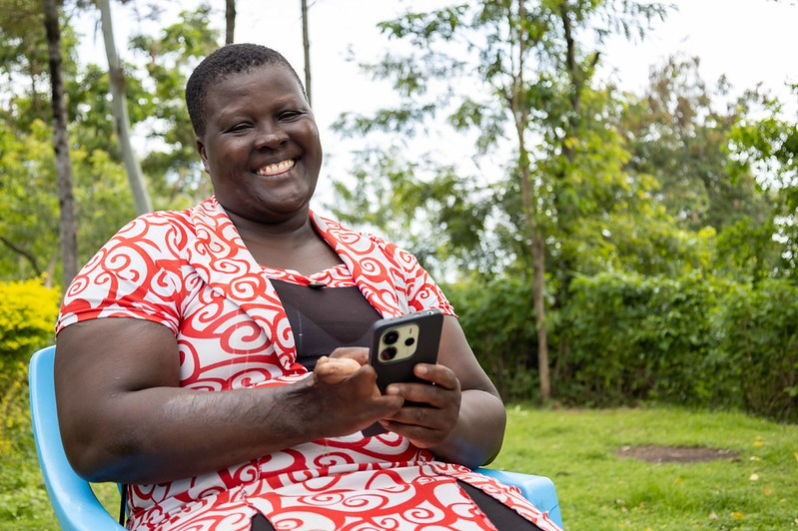
West Seme Ward sits in Kisumu County, western Kenya a semi-urban and rural area where women living with disabilities face a compounded set of exclusions: physical barriers to mobility, low digital literacy, limited access to formal employment, and structural marginalisation from the funding and policy ecosystems that shape community life. For women specifically, disability often intersects with economic dependence, restricted civic participation, and limited access to information.
Caroline Oreo founded Semi Forum for Women with Disabilities to address precisely these gaps. The Forum brings together women living with various forms of disability from across the sub-county, organising them around shared advocacy, peer support, and critically a table banking model in which members pool savings of KES 3,000 per person to build collective financial capacity. Caroline also coordinates with affiliated disability self-help groups across multiple sub-locations, connecting members who would otherwise remain isolated.
Prior to the AT2030 programme, Caroline's ability to mobilise resources, communicate with partners, and write proposals was severely constrained by limited access to digital tools and the knowledge to use them.
Approximately 18 months before this interview in late 2024 Caroline connected with Kilimanjaro Blind Trust Africa (KBTA), the implementing partner for the AT2030 programme funded by GDI Hub. The programme introduced her to a range of assistive and digital tools, including:
- AI tools, specifically ChatGPT, for research, drafting, and proposal writing
- Screen magnification features enabling access for members with low vision
- TalkBack (screen reader functionality) enabling voice-guided device navigation
- General smartphone functionality, communication tools, and digital filing
The training was delivered both in Kisumu and at wider KBTA sessions, and Caroline's engagement continued across the full 18-month period.
Proposal writing
Before the programme, Caroline had no access to the digital tools or knowledge needed to write competitive funding proposals. With AI-assisted drafting skills developed through KBTA’s training, she wrote a proposal to the National Affirmative Action Fund requesting KES 300,000 to boost the group's table banking project. KES 200,000 of that amount was approved a meaningful first institutional funding success for the Forum.
A larger proposal to the National Fund for the Disabled of Kenya (NFDK) for approximately KES 1 million was unsuccessful in its full form, though a smaller amount approximately KES 20,000 was eventually received. Caroline's account reflects a realistic picture: digital skills have opened the door to the funding ecosystem, but success is not guaranteed, and the barriers remain significant.
"Previously, we were sweating to write these proposals, but at least we have succeeded in one."
Preparing for an ILO meeting AI as a real-time enabler
One of the most striking moments in Caroline's account is her description of using ChatGPT in real time, on her phone to generate questions to present at an International Labour Organization meeting she had been invited to attend, at which the Kisumu County Governor was also present. The questions she generated addressed employment barriers for persons living with disabilities, workplace accessibility, and the county government's use of its 5% disability employment quota.
This is a demonstration of what becomes possible when a woman living with a disability in a rural Kenyan ward has access to AI-based technologies along with the understanding of how to use these. Caroline had been called to the meeting; she used the tool available to her to show up prepared.
"I just type here and it gives me questions I can ask. Even when I'm going to meet the governor, I can prepare."
Caroline used her new digital skills to support the collection of disability certificates a formal documentation requirement for accessing grants from bodies such as the National Council for Persons with Disabilities (NCPWD), The Association for the Physically Disabled of Kenya (APDK). Assisting members to obtain and submit these certificates has been a practical step toward eligibility for the funding streams Caroline is now able to pursue.
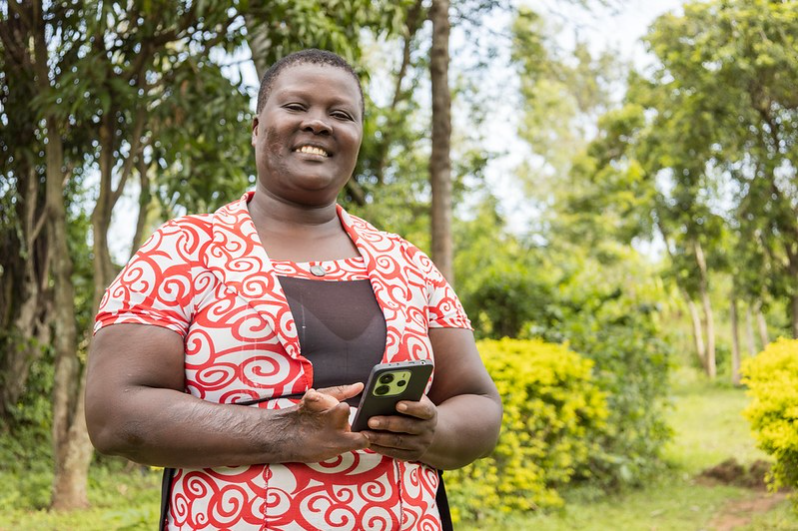
Peer knowledge transfer.
Caroline's secretary has learned to use the magnification feature on her smartphone a direct and documentable skill transfer. Another member of an affiliated group, Ken, became an early adopter of TalkBack and text-to-speech functionality, and Caroline describes him as a first learner within his community, testing features and sharing awareness.
However, Caroline is candid about the limits of peer transfer. The core barrier is device access: most members of the Forum do not own smartphones, making it impossible for them to use the tools they are being introduced to. Feature phones cannot run the applications central to the training. This is the single most significant structural constraint on the programme's reach within this community.
"Most of these women don't have smartphones. That is another challenge. Education is another challenge.
Caroline is not waiting. She continues to organise, to apply, to advocate. She asks one thing of the programme going forward: continuity. As technology evolves, she wants to keep learning alongside it.
"When I could get new technologies, I want to be there. I want to keep going."
GDI Hub's AT2030 programme supports the scaling of assistive technology access across low- and middle-income countries, working through trusted local partners such as KBTA. Caroline's experience illustrates both what is working and what remains unfinished: digital inclusion for women living with disabilities in rural Kenya requires not just training, but sustained investment in device access, literacy support, and long-term partnership.