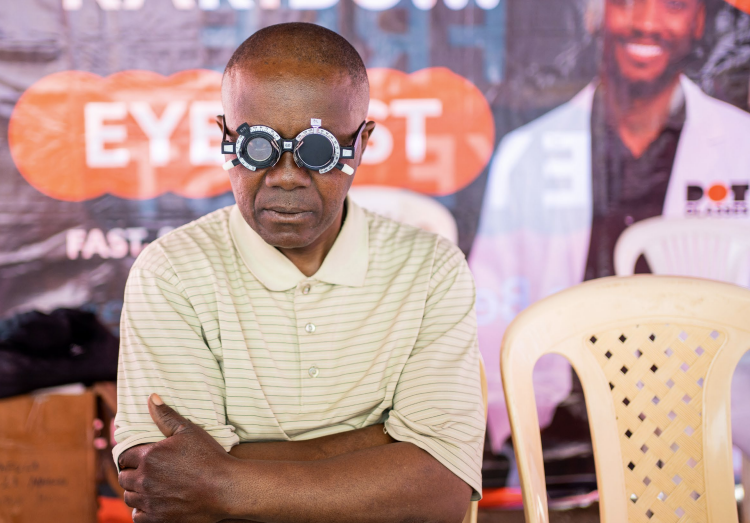
Simplified Refraction Eyewear for Low Resource Settings Field Trial Toolkit.
This toolkit is a practical guide for delivering simplified refraction eyewear in low-resource settings. It draws on a field trial conducted across seven community sites in Nairobi and Kiambu Counties in June– August 2025. It is designed to help teams:
• deliver vision camps safely and efficiently
• maintain protocol and data quality
• generate evidence that supports real decisions about scale
This toolkit focuses on how to deliver. It covers field operations, ethics and safeguarding, monitoring, and partner roles, based on what worked in practice.
It sits alongside two complementary outputs from the trial:
- An impact snapshot report that presents an accessible account of the study, using follow-up data and user experience to illustrate the everyday impact of eyeglasses and why the findings matter for implementation and scale.
- An academic paper (forthcoming) that provides a detailed comparative performance analysis, methods, and technical interpretation.
Context: DOT Glasses, and why this field trial matters
Uncorrected refractive error is one of the leading causes of avoidable vision impairment globally. In many lowresource settings, access to eyecare is limited by:
- A shortage of trained professionals
- Lack of equipment and infrastructure
- Cost and distance barriers.
This creates a gap between need and access. DOT Glasses is designed to address this gap. It enables basic vision screening and eyeglass dispensing in community settings, without requiring specialist equipment or highly trained personnel. Cases that cannot be addressed through this model are referred onward for clinical care.
This trial tested DOT Glasses against full refraction (the clinical gold standard) to understand:
- Where simplified screening provides meaningful correction
- What conditions are needed for safe, high-quality delivery
- How the model performs in real field settings