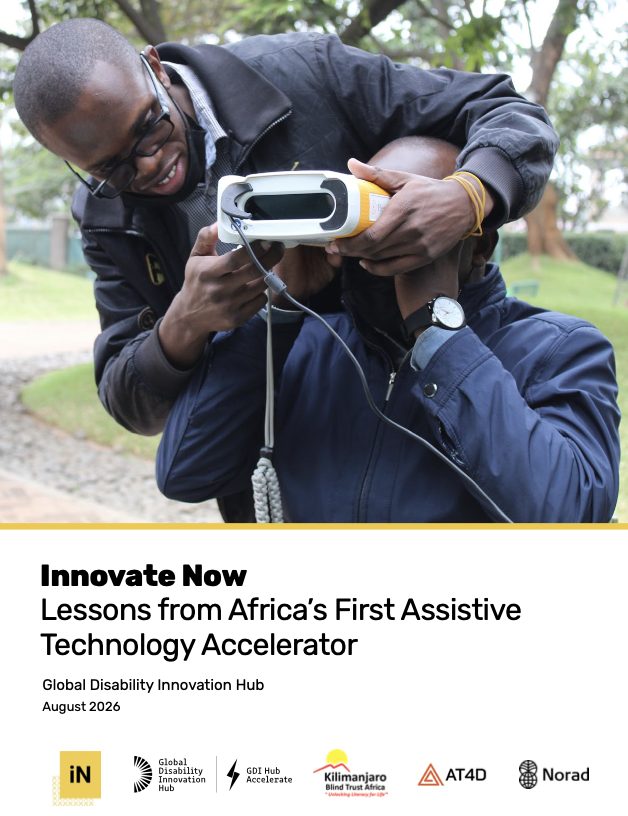
Lessons from Africa’s First Assistive Technology Accelerator
Executive Summary
Innovate Now, Africa’s first accelerator dedicated to assistive technology, was established in 2019 through a partnership between GDI Hub and Kilimanjaro Blind Trust Africa (KBTA). Over more than six years and ten cohorts, it supported more than eighty ventures from eleven countries, testing whether sustained, specialist support could help locally developed assistive technology reach scale. These lessons informed the creation of GDI Accelerate, GDI Hub’s platform for venture building and ecosystem development. Building on the experience of Innovate Now, GDI Accelerate combines venture support with market development, strategic partnerships, financing, shared infrastructure, research, and capacity building to strengthen the wider systems in which disability innovation develops.
The Programme
Innovate Now, Africa’s first accelerator dedicated to assistive technology, was established in 2019 through a partnership between GDI Hub and Kilimanjaro Blind Trust Africa (KBTA). Over more than six years and ten cohorts, it supported more than eighty ventures from eleven countries, testing whether sustained, specialist support could help locally developed assistive technology reach scale.
The Response
These lessons informed the creation of GDI Accelerate, GDI Hub’s platform for venture building and ecosystem development. Building on the experience of Innovate Now, GDI Accelerate combines venture support with market development, strategic partnerships, financing, shared infrastructure, research, and capacity building to strengthen the wider systems in which disability innovation develops.
The Evidence
Innovate Now exceeded many of its original programme targets and continued to expand its reach, venture pipeline and capital mobilisation through its latest phase. Its alumni mobilised more than USD 3 million in follow-on funding.
Alongside these outcomes, the programme generated a unique body of longitudinal evidence about the conditions that shape whether assistive technology ventures grow. It showed that strengthening founders and ventures is essential, but insufficient on its own. Long-term growth also depends on the markets, financing, infrastructure, and institutions that surround them.