How Digital Skills Are Rewriting the Story of Disability-Led Organisations in Rural Kenya: Paul Olan’g
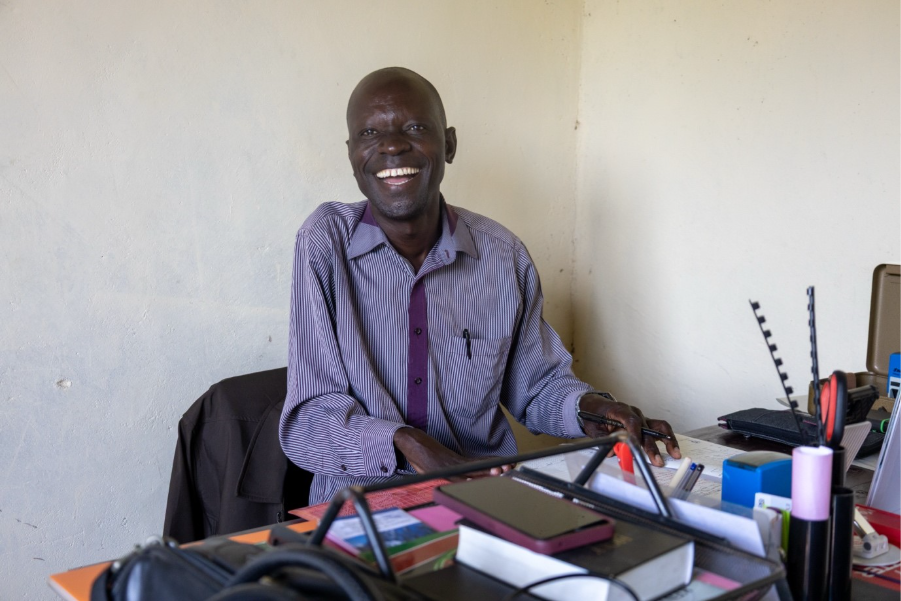
Three years ago, Paul Olan'g ran a disability advocacy organisation out of a shelf of box files. Today, he sits on two government advisory boards, has secured international climate funding, and can deliver a partner report in 30 minutes.
The change, he says, began with learning how to use the phone already in his pocket.
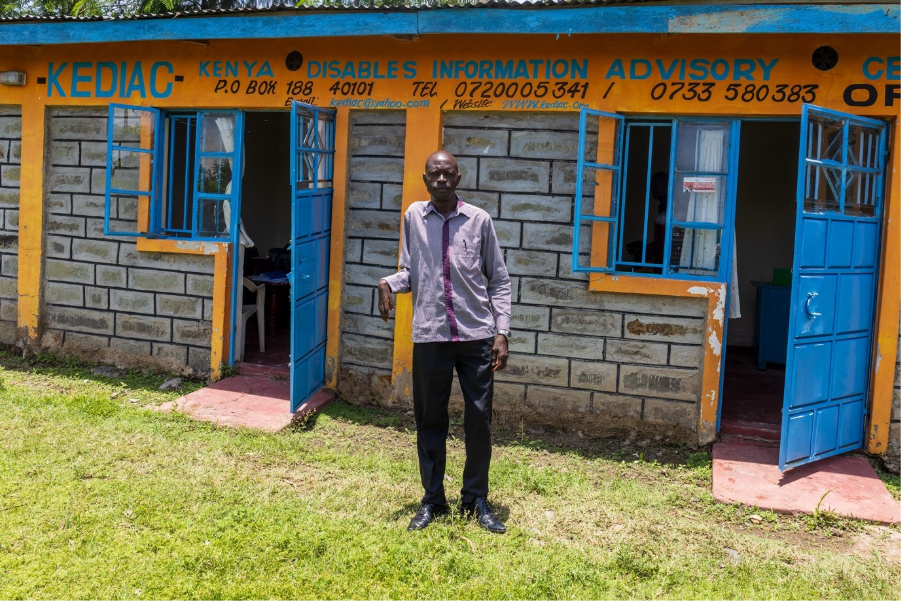
Olan'g is the founder and Executive Director of the Kenya Disabled Information Advisory Centre (KEDIAC) a community-based organisation working with persons living with various forms of disability in Nyando Sub-County, Kisumu County. KEDIAC works across 25 individual members and 15 affiliated disability groups, reaching an estimated 600 people across the region.
For years, the organisation's records were physical: handwritten payment vouchers, petty cash receipts, registration sheets filed in box files that were difficult to protect and impossible to search. Communication with partners was slow. Reporting took a week. And the digital tools that could have helped were entirely unfamiliar.
That began to change in 2024, when Kilimanjaro Blind Trust Africa (KBTA) implementing the AT2030 programme, funded by GDI Hub identified KEDIAC through a disability sector survey and enrolled Olan'g in a structured capacity-building programme. Paul and his team were trained in assistive technologies, digital record-keeping, resource mobilisation, proposal writing, and virtual communication.
"We were using our phones ordinarily, but we realised there were a lot of applications we didn't know how to use. We did not even realise they were there."
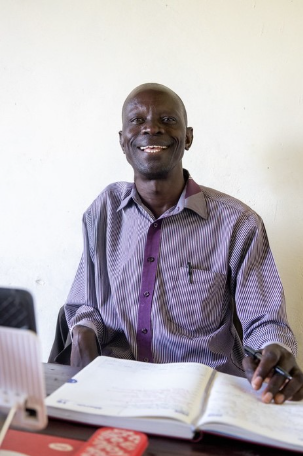
The transformation has been both practical and institutional. KEDIAC now stores all its records on external hard drives and cloud email the office has no filing cabinets. When a partner requests a report at short notice, the response comes within the hour. A Facebook page has extended the organisation's reach. A WhatsApp group connects members who previously struggled to meet in person due to mobility barriers.
For members living with speech impairments or low literacy, voice notes have become a lifeline allowing equal participation in meetings, reporting, and organisational life without requiring travel or written fluency.
The skills extended beyond KEDIAC itself. Olan'g's team has since trained 10 of the 15 affiliated disability groups. One group leader who had never owned a smartphone acquired one and now coordinates with his entire community online.
The capacity gains translated into funding. Using ChatGPT to contextualise research on climate justice and disability, KEDIAC successfully applied for a two-year Climate Justice Resilience Action Project grant from the Climate Justice Resilience Fund, through Action Network for the Disabled Nairobi. Year one funding reached approximately KES 500,000.
Olan'g has since been appointed to the board of Moral Welfare Foundation Kenya, to the Nyando Sub-County Endemic Diseases Control Council, and to the Kisumu County Budget and Economic Forum in each case representing the interests of persons living with disabilities.
"We can be felt. We can be seen. Persons with a disability have innate potential and can contribute constructively in community development with their own funding, with their own resources."
GDI Hub's AT2030 programme supports the scaling of assistive technology access across low- and middle-income countries, working through trusted local partners such as KBTA. KEDIAC's experience illustrates what becomes possible when digital inclusion is treated not as an add-on, but as foundational infrastructure for disability-led civil society.
KEDIAC is now planning to deepen its engagement with disability groups deeper in Nyando's rural areas. Olan'g is clear about what he wants next: more organisations brought into the digital mainstream and the lasting change that comes with it.