Advance Cohort of 2026
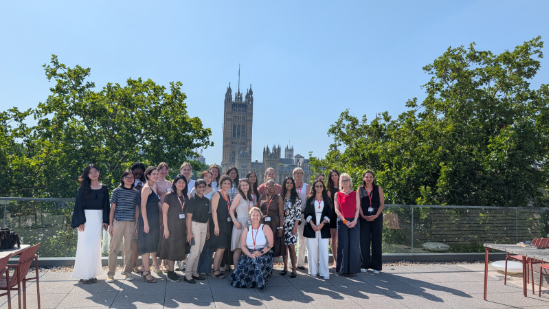
Advance 2026 is an annual global innovation accelerator led by the Royal Academy of Engineering.
This year, in partnership with the Global Disability Innovation Hub’s UK International Development-funded AT2030 programme, the accelerator is addressing accessibility and assistive and inclusive technologies as founders tackle real-world challenges across healthcare, education, manufacturing and sustainability.
The Advance programme 2026 brought together twenty of the world's most promising engineering entrepreneurs in the UK to accelerate the growth of ventures developing accessible, assistive and inclusive technologies.
Working under the theme of 'Accessibility, Assistive and Inclusive Technologies', the founders are tackling real-world challenges across healthcare, education, manufacturing and sustainability. Each brought a unique perspective, combining technical expertise, entrepreneurial ambition and, for many, lived experience of the challenges they are working to solve.
The Culmination of a Seven-Month Journey
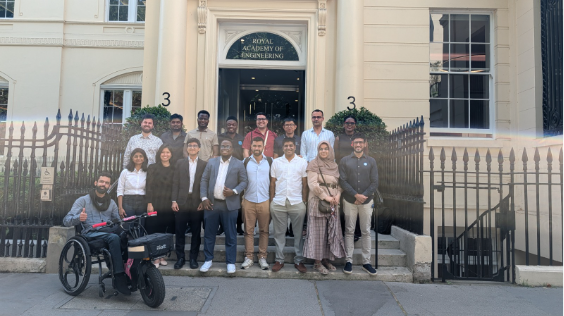
Since January, the cohort had been working through a bespoke, fully funded programme of relationship-building and business growth modules, covering everything from business model deep-dives and stakeholder mapping to storytelling, investment readiness and IP protection, supported by expert mentors and one-to-one sessions tailored to each venture.
The residential brought all of that learning into one intensive fortnight in the UK. Founders refined their investment and growth strategies with experienced mentors, developed stronger leadership and commercial skills, built relationships across the UK's innovation ecosystem, and received expert feedback through workshops and pitch sessions. Just as importantly, they connected with fellow entrepreneurs solving some of the world's biggest challenges, a peer network that will outlast the programme itself through the Leaders in Innovation Fellowships community of more than 1,500 alumni worldwide.
Read more about the awardees and their innovations here:
Pitch Day: Twenty Ventures, One Stage
The centrepiece of the residential was Pitch Day, where all twenty founders presented their innovations to an audience of investors, disability advocates, ecosystem leaders and people with lived experience. The innovations on show shared a common ambition: to make everyday life more accessible, inclusive and empowering, and to create more inclusive communities around the world.
Alongside the pitches, the Knowledge Exchange Workshop brought the same community together to explore some of the biggest opportunities and challenges facing accessibility and inclusive innovation today. From rethinking how we design inclusive education, to creating technologies that promote greater independence, to embedding accessibility into infrastructure from the very beginning, the day was a reminder that engineering has the power to create solutions that work better for everyone.
From the Stage to the Research Room
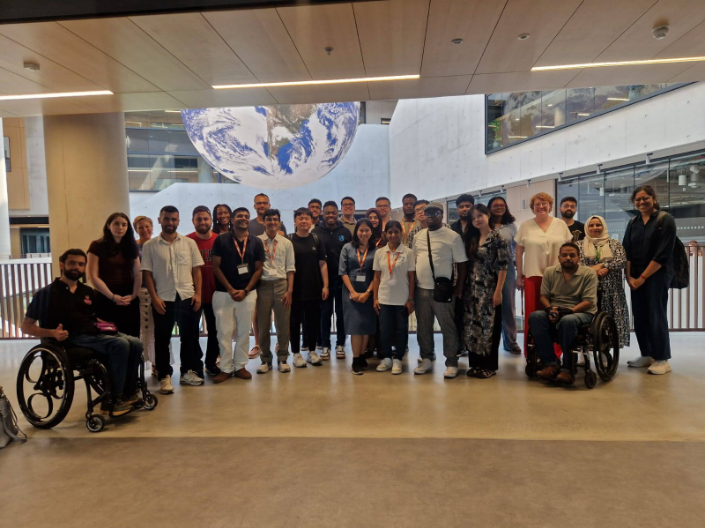
The cohort also visited GDI Hub, at our UCL campus where Tigmanshu Bhatnagar and Dr Maryam Bandukda hosted a two-hour working session on user research for UK market entry.
Each founder arrived with the question of where their genuine uncertainty sat. For some, that was the customer. For others, it was the competitive landscape, regulation, or the route to first revenue. By mapping what they already knew against what they still needed to find out, every founder left with a lean research plan they could act on.
The session drew on UCL's research depth and on Tigmanshu and Maryam's combined track record across assistive technology user studies, regulation and clinical translation. It reflected one of the practical ways GDI Hub supports global assistive technology founders.
Why This Matters
Assistive technology markets are hard to enter and harder to scale in. Founders frequently arrive with strong technology and a clear sense of mission, but the gap between a working product and a sustainable business is rarely technical. It is a gap of evidence: about who will buy, who will pay, what regulation requires, and what disabled people need and want from a product in their daily lives.
Advance exists to close that gap. The programme takes no equity, fees or IP from the entrepreneurs it supports. Instead, it pairs entrepreneurial ambition with structured mentoring, research rigour and a community of practice, giving founders the tools to test their assumptions before those assumptions become expensive. Graduates also become eligible for endorsement for the UK's Global Talent Visa, opening a longer-term route into the UK innovation ecosystem.
What Comes Next?
A huge congratulations to every entrepreneur who pitched, and thank you to the mentors, judges, partners and guests who shared their expertise throughout the residential. We are excited to see where these innovations go next, and we will be following the cohort's progress as they put their plans into action.
Advance 2026 is a collaboration between the Royal Academy of Engineering and Global Disability Innovation Hub, delivered as part of the AT2030 programme, which is funded by UK International Development. Advance is part of the Academy's Leaders in Innovation Fellowships programme.